
NFT Games and the Metaverse: From Gold Rush Hype to a Patient Future
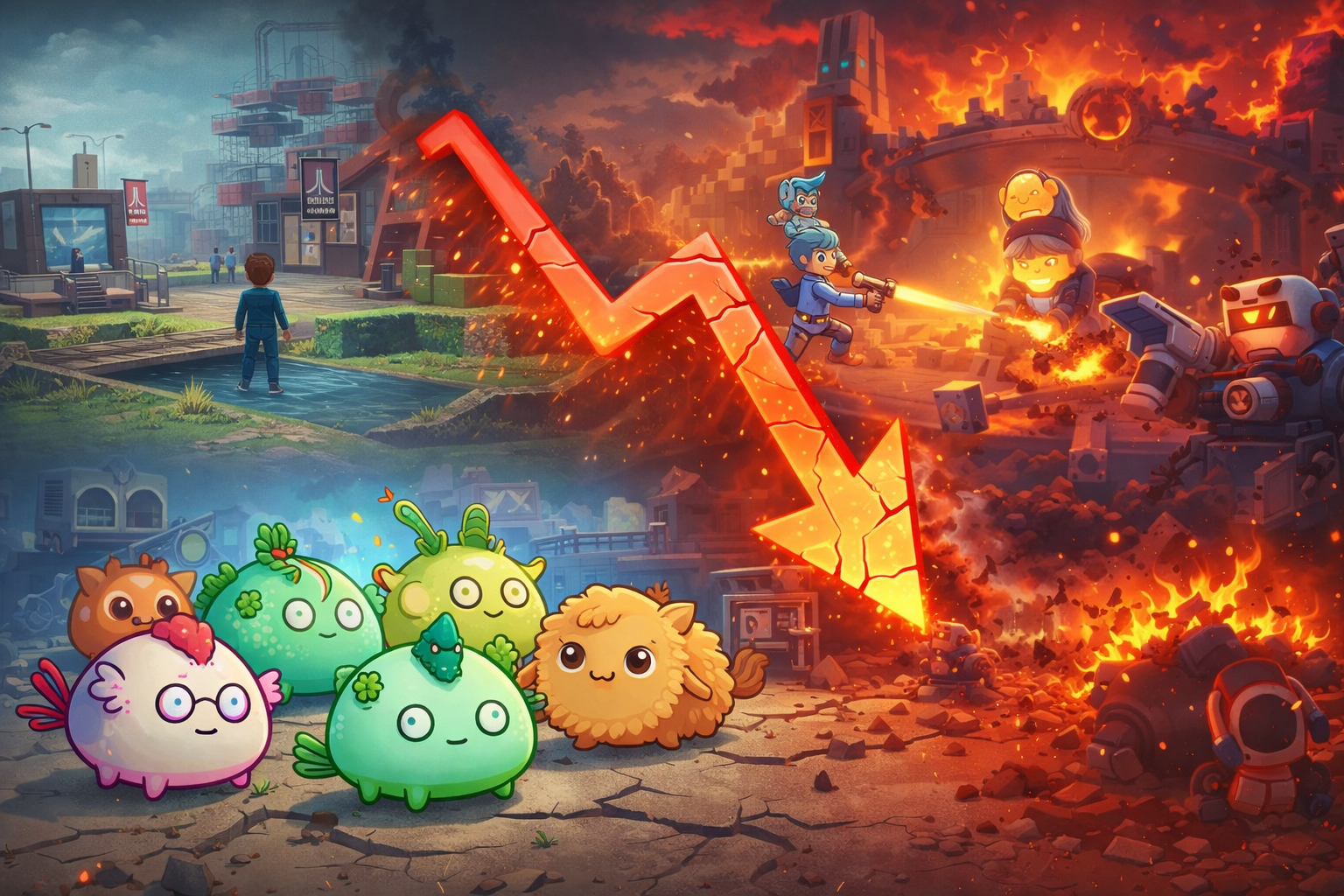
After exploding in 2021 with promises of “play-to-earn” rewards and a fully immersive metaverse, NFT gaming entered a harsh winter. Hype-driven token economies collapsed, user bases evaporated, and the metaverse narrative stalled as players realized most projects delivered speculation—not gameplay.
In 2021, you couldn’t spend five minutes online without hearing about NFT games or the metaverse.
Investors poured billions. Players chased daily rewards. Startups promised a revolution that would make consoles obsolete.
For a moment, the future felt inevitable:
We would play games, earn real money, own our digital assets, and live inside persistent virtual worlds.
And then — almost as fast as it arrived — it all collapsed.
Token prices tanked, player bases vanished, and the metaverse turned into a punchline on Twitter.
So what happened? And more importantly: what remains after the hype disappeared?
The Hype Phase: “Play Games, Get Rich”
The first wave of NFT gaming arrived during a perfect storm of conditions.
Crypto prices were soaring
Retail investors were hungry
Gamers were stuck at home during the pandemic
Headlines promised simple games with life-changing payouts
Projects like Axie Infinity, The Sandbox, Decentraland, and many others exploded in popularity.
The message was irresistible: Don’t just play — earn.
Players invested into characters, virtual land, tokens, guilds, “scholarships,” and breeding mechanics.
Some early adopters made real money.
Most arrived too late.
The underlying truth was simple:
People joined to profit, not to play.
Gameplay was secondary—often repetitive, shallow, or simply uninteresting.
Economies ballooned as new money poured in, and early adopters cashed out.
It all worked until the moment it didn’t.
The Crash: The Math Couldn’t Hold
The collapse of NFT gaming wasn’t caused by flawed technology.
It was caused by flawed design, speculation, and human nature.
1. Economies Depended on New Users
Rewards only existed because new players kept buying in.
When growth slowed, rewards shrank, users left, and tokens collapsed.
2. Tokens Came Before Games
Most projects were built around monetization rather than entertainment.
Instead of asking “Is this fun?” developers asked “How quickly can we monetize this?”
Gamers responded as expected: they walked away.
3. Speculation Outran Innovation
Any asset that can rise 10x can fall 90%.
That volatility scared studios, regulators, and mainstream players.
4. The Metaverse Was Promised Before It Existed
Companies painted visions of:
virtual workplaces
3D social hubs
VR concerts
digital malls
But users never arrived.
The reason is straightforward:
NFT metaverses lacked the same thing NFT games lacked — a compelling reason to stay.
There were no established communities, no compelling gameplay loops, and no seamless experience pulling users back in.
You cannot convince the world to relocate to a digital city if there are no reasons to live there.
What Remains: A Good Idea With Poor Execution
When the hype collapsed, something notable remained.
Blockchain worked
Digital ownership remained viable
Players discovered they enjoy owning items instead of renting them
Developers realized NFTs can be powerful tools for:
Access and membership
Event tickets
In-game cosmetics
User-generated economies
Secondary markets
The problem was not the vision.
It was timing, speculation, and ego.
Gamers never rejected digital ownership.
They rejected overpriced JPEGs, mindless grind-to-earn systems, and empty virtual worlds selling land nobody wanted.
The Future: Play-to-Own, Not Play-to-Earn
The next generation of Web3 games will look very different.
Games First, Crypto Second
Future projects will:
be playable and fun without tokens,
treat blockchain as an optional feature,
reward creativity and skill instead of monotony.
A Real Metaverse Will Be a Network of Worlds
Instead of isolated corporate playgrounds, expect:
interoperable game economies
shared digital identities
user-generated spaces
open standards for avatars, assets, and currencies
The successful metaverse may look less like a VR office and more like:
Fortnite Creative,
GTA RP servers,
or Minecraft’s modded ecosystem.
The only difference?
Ownership and identity would persist across these worlds.
Digital Property Rights Become Normal
Soon, players will question why they ever spent thousands of dollars on skins and items that they did not truly own.
NFTs — or whatever name replaces them — will become:
invisible to players,
integrated into engines,
as ordinary as cloud saves.
Value Flows Back to Communities
Secondary markets are not a threat — they are the future of game ecosystems.
Revenue will be shared between:
players,
creators,
modders,
and studios.
Final Word: A Winter Before Spring
Yes, the hype is gone.
Yes, the gold rush ended.
But this is not the end — it’s the reset the industry needed.
Hype cycles attract tourists.
Crashes leave behind builders.
The next era of NFT gaming and metaverse development will not be powered by promises of fast wealth.
It will be driven by:
better game design,
sustainable economies,
digital worlds worth exploring,
and technology that empowers players instead of milking them.
The story of NFT gaming isn’t finished.
It is finally entering the phase where we start building what everyone promised.